
Label Type
Thermal labels are made using heat, primarily through 2 methods:
- Direct Thermal, where heat-sensitive paper darkens to form text/images, ideal for short-term use;
- Thermal Transfer, where heat melts ink from a ribbon (wax/wax-resin/resin) onto the label, greating durable, long lasting prints
The label itself is a multi-layered product, starting with base paper, adding specialized thermal coatings (for direct thermal) or a compatible face stock (for transfer), and a strong adhesive.How are these labels created?
- Direct Thermal (No Ink/Ribbon Needed)
- Material: Uses special heat-sensitive paper with chemical coatings.
- Process: A heated printhead selectively touches the label surface.
- Result: The heat triggers a chemical reaction, turning the coated areas black to form the image (e.g., barcodes, receipts).
- Use: Good for short-term uses like shipping labels, grocery receipts, or tickets.
- Thermal Transfer (Uses a Ribbon)
- Material: Uses a standard label stock (paper, synthetic) and a thermal transfer ribbon (wax, resin, or mix).
- Process: The printhead heats the ribbon, melting the ink onto the label.
- Result: A durable, crisp image that resists fading and abrasion.
- Use: Best for durable applications like asset tags, product labels, and long-term inventory.
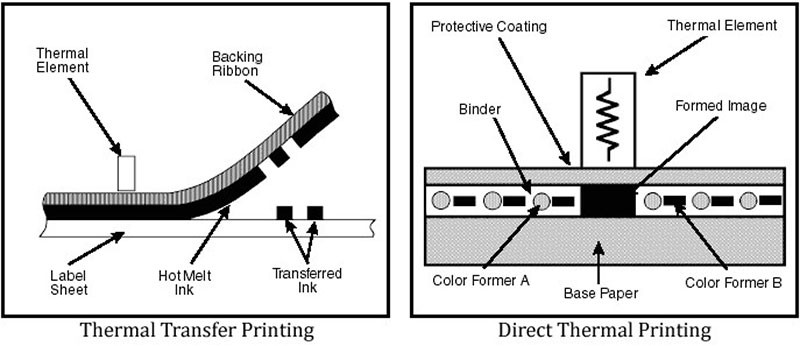
Direct Thermal vs. Thermal Transfer Labels
Thermal label printers produce accurate, high quality images that are necessary for barcode printing and barcode scanning. When it comes to thermal label printing, two different types of printing methods are used. They are, Direct Thermal and Thermal Transfer. People often confuse between direct thermal and thermal transfer printing and most people don’t have a clear understanding of which method best suits their needs. Thermal transfer printers will print both thermal transfer and direct thermal labels. Direct thermal printers are usually lower cost than the equivalent thermal transfer model. The following post provides an explanation about direct thermal and thermal transfer printing technologies, their advantages, disadvantages and how to understand which printing method will best suit your needs.
What is a direct thermal Printer?
A direct thermal printer uses a thermal printhead to heat chemically treated, heat activated label stock. The labels feed through the printer and the printhead heats the surface of the specially formulated label. The print is created when the label reacts by darkening in response to the heat from the printer. This type of printing method is more cost effective as it doesn’t need any ink or printer ribbons and the printer is usually more compact compared to a thermal transfer printer. Direct thermal printing method is ideal for shorter life span labels such as transport and parcel delivery labels and food labelling. It’s also ideal for receipt printing at retail stores since they don’t require a long lifespan. They are also popular for ticketing, short term price labels and retail industries. Most mobile printers use direct thermal technology. The primary benefit of using a direct thermal printer is that it’s less costly and is easier to use compared to thermal transfer printers. The Main drawback of using direct thermal printers is that the printed image will fade over time and is sensitive to exposure to heat and ultra violet light. Typically, direct thermal labels have a life span of between 6-9 months, depending on the environment and the type of label used.
What is a Thermal Transfer printer?
Thermal Transfer printers use heat to bond or transfer a thin film of wax or resin coating that’s in a carbon based printer ribbon onto a label. The ink is absorbed into the label creating a durable, long-lasting image. The print quality is higher and crisper than a direct thermal printer labels and therefore makes it ideal for printing high density bar codes and labels that require a longer lifespan. Thermal transfer printers use a wider variety of media than direct thermal printers; including paper, polyester and polypropylene, film and even foil substrates. Thermal transfer ribbons are available in different colours, therefore printing is not restricted to just black. This type of printing method is recommended for labels that need to last longer than 6 months. This type of printing method is ideal for product identification, inventory labels, asset labelling, tags, certification labels, indoor/outdoor signage, long term high density barcode labels. The main drawback of using thermal transfer technology is that it’s more expensive and printer ribbons need to be replaced. Note when using thermal transfer printing, the specific label material and ribbon must be carefully matched in order to maximise the print quality, printer performance and the print durability.
The type of printer that best suits your needs will depend upon the nature of your application. Consider the following factors to help you decide which printing methods better suits you.
- What is the preferred lifespan of the labels? For example do they need to have a lifespan of more than a year?
- Will the labels be exposed to different environmental conditions? Such as sunlight, moisture or heat.
- Will the labels be subjected to chemicals or other forms of abrasives?
- Will the labels be subjected to surface friction?
- Will you need high density barcodes?
The following summary lists the main advantages and disadvantages between direct thermal printing and thermal transfer printing;
Direct thermal printing advantages and disadvantages
Advantages
- Does not require toner, ink or printer ribbon
- Less expensive than thermal transfer printers
- Easier media changeovers
- Need little maintenance or replacement of supplies
Disadvantages
- Labels discolor or fade after some time
- May require more maintenance or printhead replacement
- Not ideal for harsh weather conditions
Thermal Transfer Printing advantages and disadvantages
Advantages
- Higher quality compared to direct thermal printing
- Labels have a longer life span over a year or more
- It’s not restricted to only black and white printing
- Compatible with a wide variety of materials
Disadvantages
- Needs to buy printer ribbon
- Expensive than direct thermal printers
Thermal printers are designed to print within tight tolerance and to produce the exact bar widths to optimise barcode scanning.
In simplest terms the main difference between a thermal transfer printer and a direct thermal printer is that the thermal transfer printer require ribbons and a direct thermal printer doesn’t.
Thermal transfer involves the printheads heating the backside of a ribbon to melt and transfer the compounds into the label in order to create the image.
Direct thermal printers use a heat sensitive label and the printhead heats the heat sensitive media directly and this causes the colour of the material to change and create the image.
Many companies find that they need both types of printers to efficiently run their business.